Address
No.3185 Xizha Rd,Dachuangang, Zhenze,Wujiang,Suzhou,China
Work Hours
24/7 Global Support
Address
No.3185 Xizha Rd,Dachuangang, Zhenze,Wujiang,Suzhou,China
Work Hours
24/7 Global Support
Our 2026 commercial dumbwaiter buying guide covers capacity, car size, drive system, and type so you can choose the right model for your restaurant, hotel, or lab.
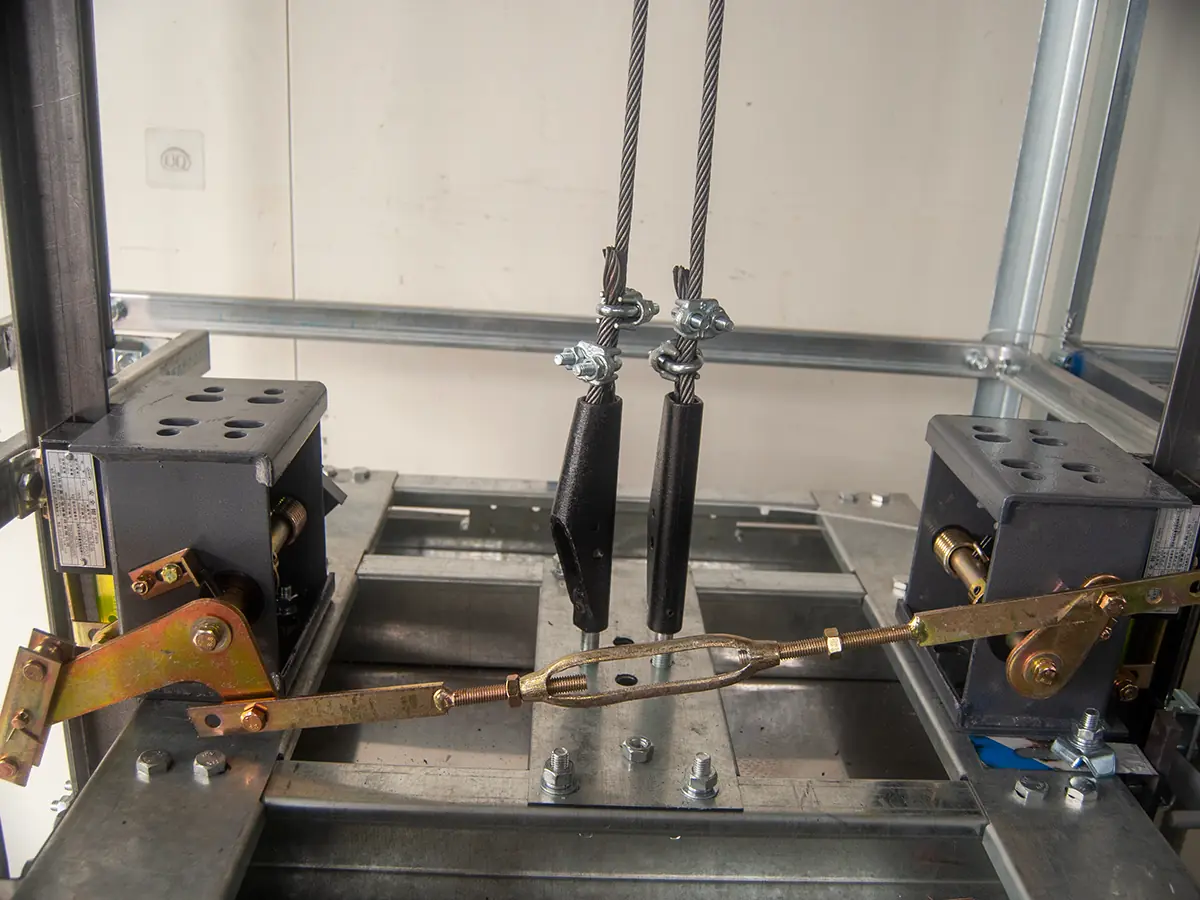
Buying a commercial dumbwaiter is a long-term investment in speed, safety, and labor savings. With so many load ratings, car sizes, and drive systems on the market, it is easy to over-specify (and overspend) or under-specify (and bottleneck your kitchen). This commercial dumbwaiter buying guide walks you through the decisions that actually matter—application, capacity, dimensions, drive type, and compliance—so you can choose a model that fits your building and pays for itself.
If you are still deciding between formats, start with our dumbwaiter vs service elevator comparison, then read our commercial dumbwaiter types guide for a side-by-side of window-type and floor-type units.
The single most important question is what you will move and where. A restaurant transporting plated meals has very different needs from a hospital moving linen or a lab moving samples. Your application sets the car size, load rating, and finish (stainless vs painted).
Read our dumbwaiter applications & industries article for a deeper look at each sector before you spec a unit.
Capacity is the maximum safe payload, not your average load. Always size for the heaviest realistic single trip, not the typical one. The table below maps common commercial dumbwaiter weight capacities to the right job:
| Capacity | Best for | Typical use |
|---|---|---|
| 50–100 kg | Light service | Documents, mail, small trays, coffee and bar service |
| 100–200 kg | Restaurants & hotels | Plated meals, dish racks, room-service terminals |
| 200–300 kg | Heavy duty | Linen carts, laundry, bulk food containers, lab loads |
| 300 kg+ | Industrial / freight | Carts, totes, and equipment transport |
As a rule of thumb, if you will ever move a full dish rack or a linen cart, start at 200 kg. Under-rating leads to slow, strained lifts and premature wear on the motor and ropes. The chart below helps match each load rating to its application.
Capacity tells you how much; dimensions tell you what fits. Standard commercial car sizes include:
Measure the largest item you will send—a 60 cm tray will not fit a 50 cm car. Always allow for the container, not just the product. If you regularly move carts, you need the 100 × 100 × 120 cm class. Getting the commercial dumbwaiter dimensions wrong is the most common (and costliest) mistake at install time.
Most commercial dumbwaiters use one of three drives:
For most restaurants and hotels, a chain-driven or wire-rope unit is the cost-effective choice. The image below shows the ropes, counterweight, and controls inside a typical drive system that you will service over the life of the lift.
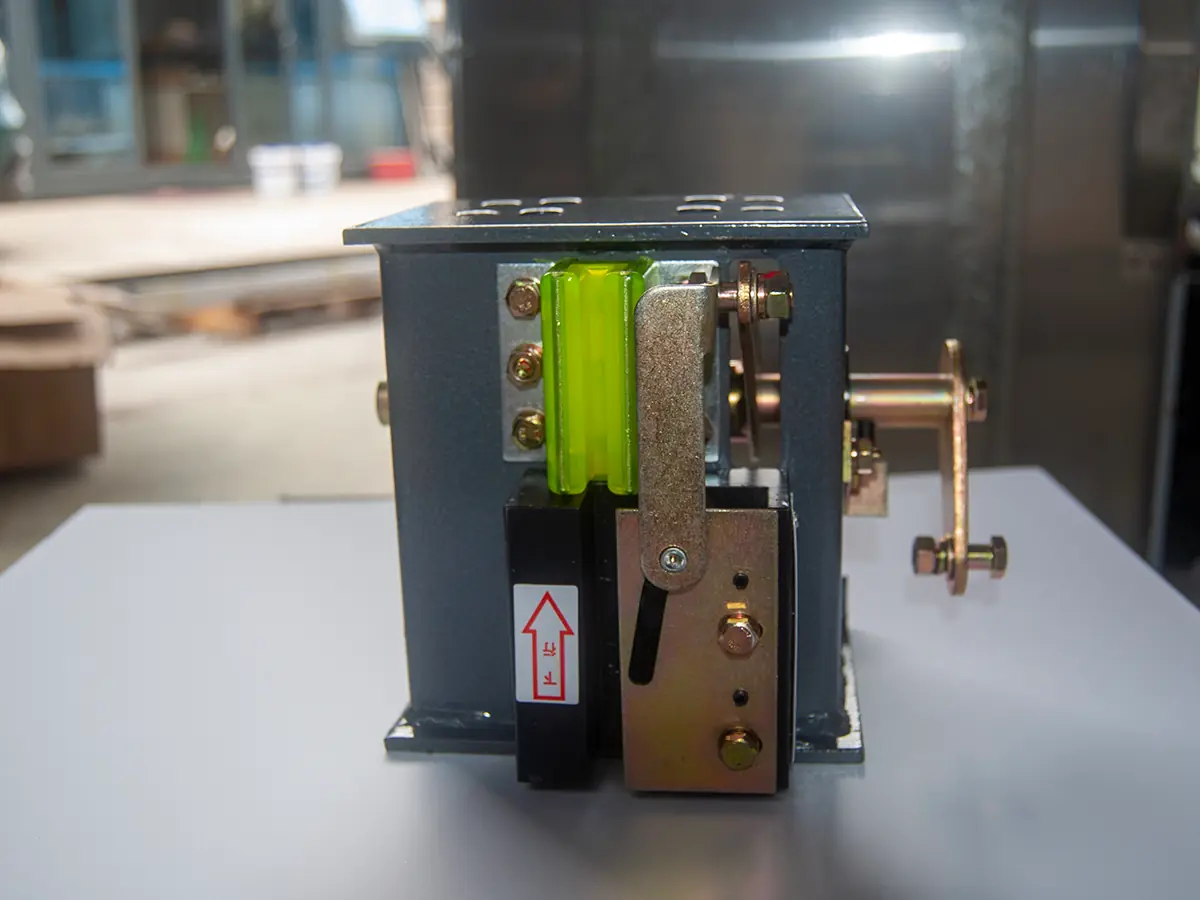
Not sure which? Our commercial dumbwaiter types guide compares both with diagrams and helps you match the format to your building.
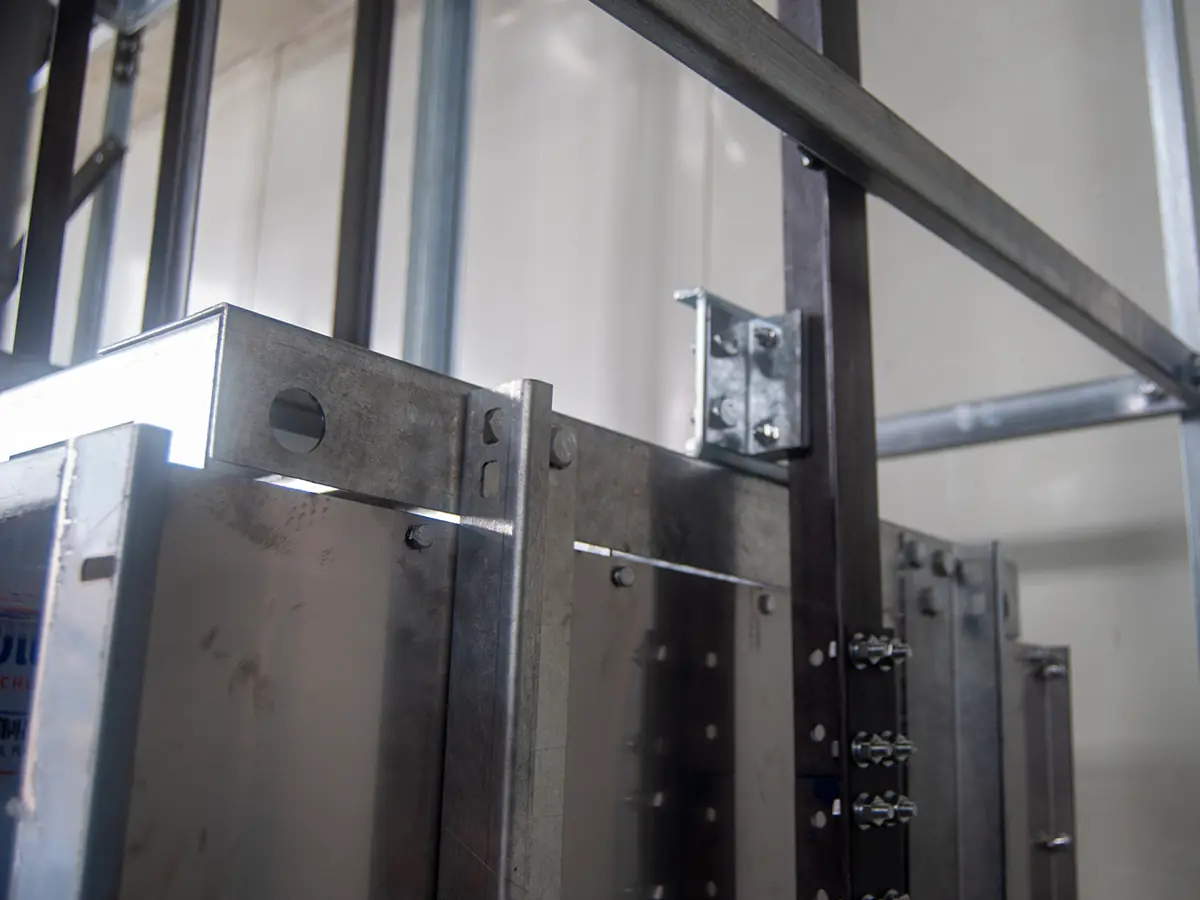
Confirm your building’s electrical supply before you spec the motor—the electric unit below shows the control and drive that determine your power requirements.
A dumbwaiter is a lifted load, so safety is non-negotiable. Look for:
Our commercial dumbwaiter safety features article covers each system in detail. Never skip permits—inspectors will check interlocks and load ratings before sign-off.
The sticker price is a fraction of the real cost. Plan for:
Factory-direct suppliers like BsiteElevator typically beat dealer markups and include engineering support, which lowers the total cost of ownership over the life of the lift.
BsiteElevator is a factory-direct global supplier of food lifts and service lifts. We engineer window-type and floor-type dumbwaiters from 50 kg to 300 kg+, with stainless or painted finishes, customizable car sizes, and CE/ASME-aligned safety. Every unit ships with installation drawings, spare parts, and lifetime technical support. Explore our full range of models or contact our team for a sized quote.
Size for your heaviest realistic single trip. For dish racks and bus tubs, 100–200 kg is typical; for linen or laundry carts, choose 200–300 kg. Never rate to your average load or the lift will strain and wear early.
Most restaurants use an 80 × 80 × 100 cm car at 100–200 kg, which fits standard dish racks and room-service trays. Venues moving carts need the 100 × 100 × 120 cm class at 200 kg or more.
Window-type is faster and cheaper to install (no pit) and suits food service through a wall. Floor-type handles carts and bulky loads but needs a shallow pit. Choose based on what you load and your building structure.
Unit pricing varies by capacity, size, and finish; our 2026 cost guide breaks down typical ranges and the hidden install costs to budget for.
Choosing the right commercial dumbwaiter comes down to matching capacity, car size, and drive to your real daily loads. Use the checklist above, then talk to our engineers for a configuration that fits your building and budget. Visit bsiteelevator.com to browse models or request a quote.


[…] which to spec? Our dumbwaiter buying guide walks through the full decision […]
[…] from engineering and welding to the load test that proves it’s safe — so you can judge a dumbwaiter manufacturer on more than a price […]
[…] the right control system for your building. If you are comparing models, it pairs well with our commercial dumbwaiter buying guide and our look at how a quality dumbwaiter is […]
[…] and safety, and how to choose and maintain one. If you are weighing a purchase, pair this with our dumbwaiter buying guide and our 2026 cost […]
[…] and safety, and how to choose and maintain one. If you are weighing a purchase, pair this with our dumbwaiter buying guide and our 2026 cost […]
[…] retrofit, service elevator versus dumbwaiter, compliance, timeline, and budget. Start with our buying guide to lock the right spec, then come back here to install it […]
[…] export logistics, installation, and the pitfalls that cost buyers the most. It pairs with our buying guide (what to buy) and our look at how a quality unit is built (what good manufacturing looks […]
[…] export logistics, installation, and the pitfalls that cost buyers the most. It pairs with our buying guide (what to buy) and our look at how a quality unit is built (what good manufacturing looks […]
[…] for a decade. And when you are ready to install one of your own, our installation guide and buying guide cover the rest of the […]
[…] headroom, pits, and what changes when you retrofit an existing building. It pairs with our buying guide and our installation […]
[…] This guide covers why hospitals and care homes install dumbwaiters, how healthcare food service works around one, the hygiene and compliance requirements that differ from restaurants, and how to specify and install the right unit. It builds on our food lift guide and our buying guide. […]
[…] This guide covers why hospitals and care homes install dumbwaiters, how healthcare food service works around one, the hygiene and compliance requirements that differ from restaurants, and how to specify and install the right unit. It builds on our food lift guide and our buying guide. […]
[…] This guide covers why hotels and commercial laundries install laundry dumbwaiters, how they differ from food-service dumbwaiters, the sizes and configurations that work, hygiene and safety requirements, and what to consider before installing one. It builds on our hotel dumbwaiter guide and our buying guide. […]
[…] This guide covers why hotels and commercial laundries install laundry dumbwaiters, how they differ from food-service dumbwaiters, the sizes and configurations that work, hygiene and safety requirements, and what to consider before installing one. It builds on our hotel dumbwaiter guide and our buying guide. […]
[…] clear payback. Start with capacity and hygiene grade, plan the shaft early, and pair this with our buying guide when you […]
[…] Never put people in a dumbwaiter — it is unsafe and non-compliant. For shaft planning or our buying guide, we cover the goods side in […]
[…] A church dumbwaiter supports fellowship by removing carrying, lowering risk, and keeping the space calm. Size it to the load, choose a quiet drive, and install it with care. For a wider comparison, read the dumbwaiter differences and selection guide from our partner and our buying guide. […]