Address
No.3185 Xizha Rd,Dachuangang, Zhenze,Wujiang,Suzhou,China
Work Hours
24/7 Global Support
Address
No.3185 Xizha Rd,Dachuangang, Zhenze,Wujiang,Suzhou,China
Work Hours
24/7 Global Support
The dumbwaiter control panel and electrical cabinet are the brain and muscles of the lift. Learn how they work, the safety circuits inside, and how to choose the right control system for your building.
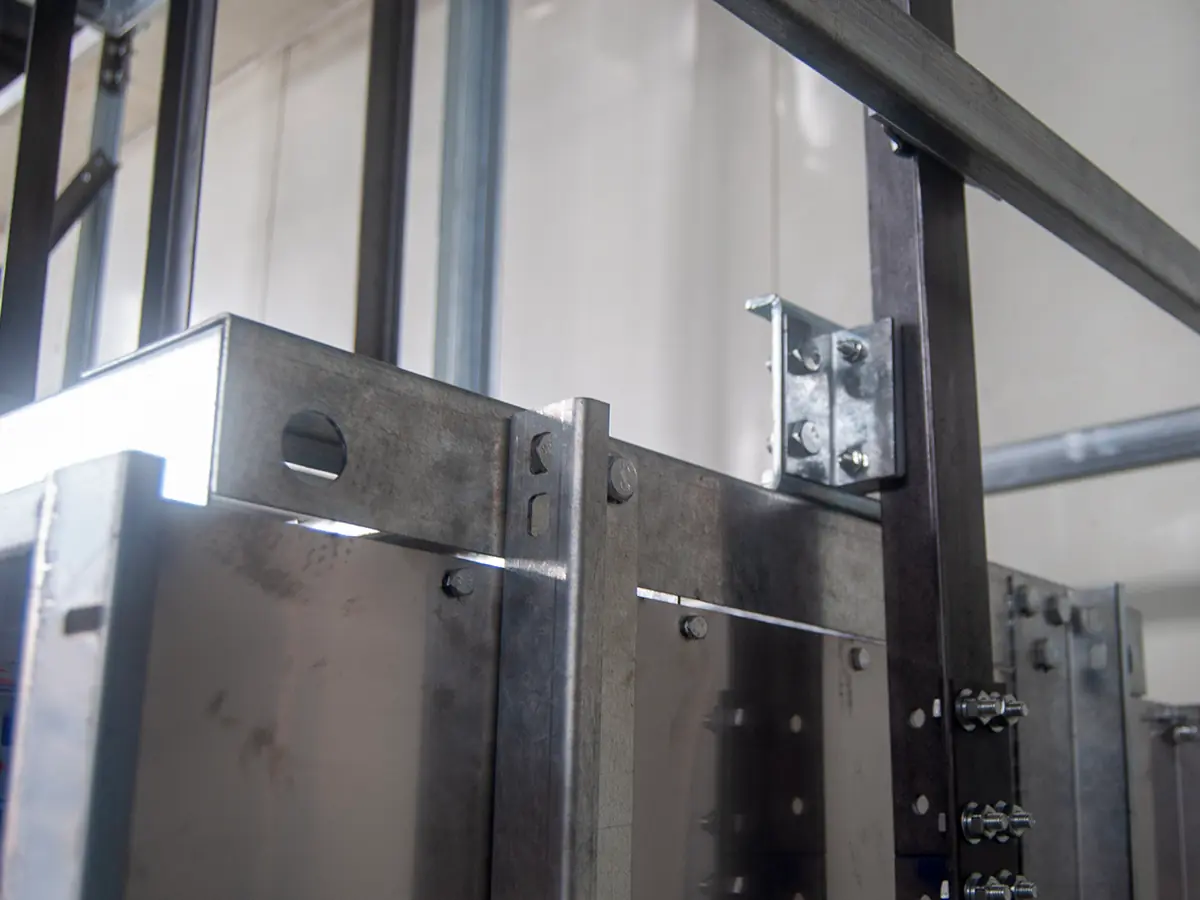
A commercial dumbwaiter looks simple from the outside: a small cab that slides between floors carrying food, linen, or parts. What makes it safe, smooth, and reliable is the part most people never see — the dumbwaiter control system. At its heart are two components: the control panel your staff press every day, and the electrical control cabinet hidden in the shaft or a service room that actually runs the machine.
This guide explains how a dumbwaiter control panel and electrical cabinet work together, what is inside them, how a single button press moves the car, the safety circuits that protect users, and how to choose the right control system for your building. If you are comparing models, it pairs well with our commercial dumbwaiter buying guide and our look at how a quality dumbwaiter is built.
The control system is the “brain and nervous system” of the lift. It takes inputs from call buttons and sensors, decides what the car should do, and drives the motor, brakes, and doors accordingly. A well-designed control system delivers three things:
Two physical pieces make this happen: the control panel (the user-facing interface) and the electrical control cabinet (the power and logic hardware).
The control panel is everything a user touches. On most commercial dumbwaiters you will find two kinds of panels.
Mounted at each floor opening, the landing call station has an up/down or direct-floor button, a position indicator, and usually an arrival chime or light. In a restaurant, this is the panel in the kitchen pass and the one on the dining floor. In a hotel, it is on each service landing. This is the panel shown in the photo above.
Mounted inside the cab, this lets an operator select a destination floor and may include an emergency stop, a key switch, and a door-open/close button. On simpler units the car panel is minimal or absent because calls are made only from landings.
Good control panels share a few traits: large, legible buttons (sometimes with braille or pictograms), sealed membranes that survive grease and cleaning spray, and clear floor indicators so staff do not send the car to the wrong level. For food-service environments, choose panels rated for wash-down or at least IP54 splash resistance.
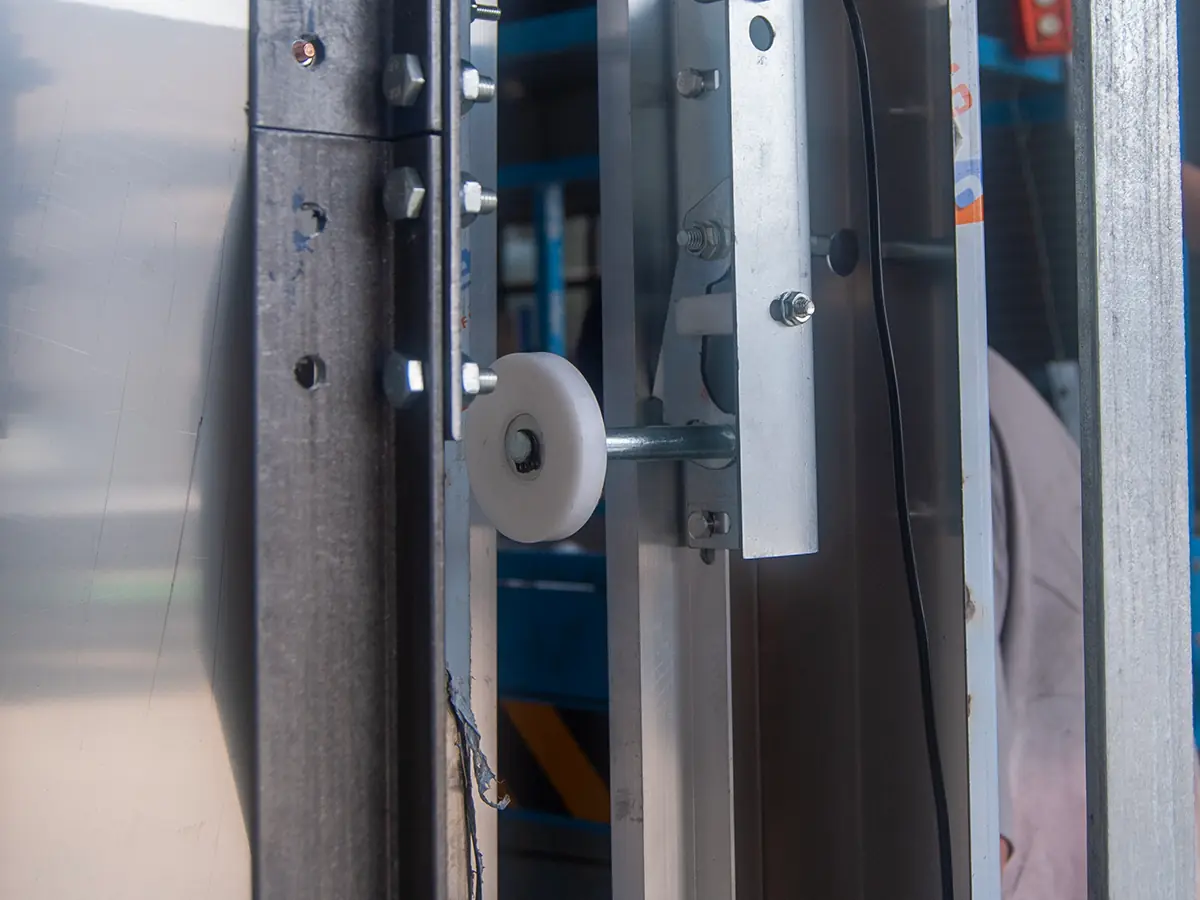
If the control panel is the face, the electrical control cabinet is the brain and muscles. It is a locked metal enclosure, typically in the shaft head, a machine room, or a service closet. Key components:
Because this cabinet carries mains voltage and controls a moving load, it must be accessible only to authorized technicians and kept dry, ventilated, and dust-free. Our maintenance guide covers the simple checks you can do without opening it.
Here is the path from “press” to “arrive”:
This loop runs dozens or hundreds of times a day, which is why component quality in the cabinet matters so much to total uptime.
Safety is not an afterthought bolted onto the controls — it is wired as a separate, hardware-enforced chain. The controller will not move the car unless every link is closed:
These are the same principles we outline in our dumbwaiter safety features article, and they are why a proper control system — not just a motor — keeps a building compliant with standards such as EN 81-3 and ASME A17.1.
When choosing a unit, the control architecture is one of the biggest differentiators.
| Aspect | Relay / Contactor Control | PLC / Microcomputer Control |
|---|---|---|
| Smoothness | Step starts, noticeable jerk | Soft start/stop via inverter |
| Diagnostics | Manual tracing of relays | Fault codes, faster service |
| Flexibility | Fixed wiring, hard to change | Reprogrammable logic |
| Reliability | Mechanical contacts wear | Fewer moving parts, longer life |
| Cost | Lower upfront | Slightly higher upfront, lower lifecycle cost |
For almost any new commercial install we recommend PLC or microcomputer control with an inverter. The small premium pays back through smoother rides, fewer service calls, and easier fault diagnosis. The types of commercial dumbwaiters you choose (window vs floor, traction vs hydraulic) all sit on top of this control layer.
Modern control boards add connectivity that older relay systems cannot: remote fault alerts, usage logging, and integration with building management systems. A hotel can see which lift is down before a guest complains; a kitchen can get a alert when a car is overloaded. This is the practical side of the smart dumbwaiter trend in hospitality — the intelligence lives in the control cabinet, not just in an app.
When specifying smart features, confirm the controller has a protected service port or network module, and that firmware updates are supported by the supplier. Connectivity is only useful if it keeps working after a year of operation.
Matching the control system to your operation avoids both under-specifying (constant breakdowns) and over-specifying (wasted budget). Consider:
You do not need to be an electrician to protect the controls:
Most “mysterious” dumbwaiter faults trace back to the control system, which is why a scheduled check of the panel and cabinet is the highest-return maintenance you can do. This is covered in more detail in our maintenance guide.
It sends a low-voltage call signal to the controller in the electrical cabinet. The controller verifies safety, drives the motor through the inverter, and stops the car level at the requested floor. The panel itself contains no power to move the car — it is the interface, not the muscle.
Often yes, but it is a redesign, not a swap. The new controller must match the motor, brake, and door operator, and the safety circuit must be re-verified. Use a supplier who can re-certify the modified lift, since changing the control affects compliance.
Intermittent stops usually point to a failing limit switch, a loose encoder connection, or a weak brake — all in or wired to the control system. Stop using the lift and call a technician; a car stranded mid-shaft is both a safety and a service risk.
If you run a single two-stop lift with light traffic, basic PLC control is enough. Smart/connected features pay off when you have multiple floors, high traffic, or several lifts you want to monitor from one place — common in hotels and resorts.
The control panel and electrical cabinet are the difference between a dumbwaiter that “mostly works” and one that runs safely for a decade. Specify a quality PLC-based system, keep the cabinet accessible and dry, and pair it with a simple maintenance habit — and the only time your staff will think about the controls is when they press the button and the car arrives.


[…] and controls — run power to the cabinet, wire the call stations, door interlocks, and control system, then verify the safety […]
[…] staff load or unload; a new call sends the car away. The logic inside is covered in depth in our control system explainer — for operators, the important part is that the machine only moves when every door is safely […]
[…] three-phase). The feed point should be confirmed with the drawings before installation; see our control system explainer for what sits inside the […]
[…] three-phase). The feed point should be confirmed with the drawings before installation; see our control system explainer for what sits inside the […]
[…] This guide explains what an electric dumbwaiter is, how its drive system works, how it compares with hydraulic and screw drives, and what to look for when choosing one. It builds on our dumbwaiter types article and our control system explainer. […]