Address
No.3185 Xizha Rd,Dachuangang, Zhenze,Wujiang,Suzhou,China
Work Hours
24/7 Global Support
Address
No.3185 Xizha Rd,Dachuangang, Zhenze,Wujiang,Suzhou,China
Work Hours
24/7 Global Support
See how a quality commercial dumbwaiter is manufactured - engineering, welding, drive assembly, and load capacity testing - and what to check in a dumbwaiter manufacturer.
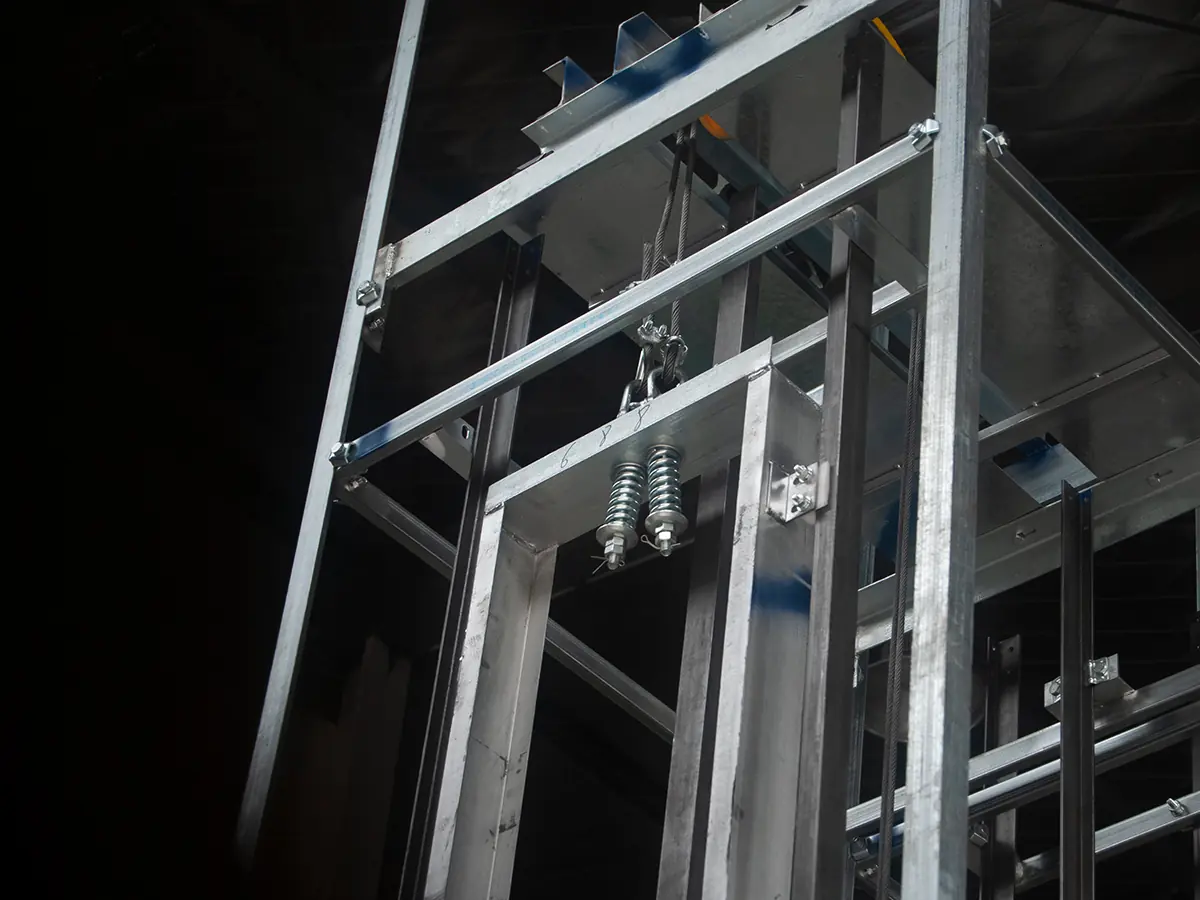
When you buy a commercial dumbwaiter, you’re not really buying a box that moves up and down — you’re buying years of reliable, safe service in a busy back-of-house environment. Two units that look identical on a spec sheet can perform completely differently after 12 months of restaurant, hotel, or hospital use. The difference almost always comes down to how the dumbwaiter was manufactured. This guide walks through how a quality commercial dumbwaiter is actually built — from engineering and welding to the load test that proves it’s safe — so you can judge a dumbwaiter manufacturer on more than a price tag.
It starts on a screen, not a factory floor. A credible manufacturer runs the numbers before cutting any steel: rated load, cab dimensions, travel height, stop count, and the duty cycle (how many trips per hour). These calculations determine frame thickness, rope diameter, and motor size. Reputable builders design to recognized benchmarks such as EN 81-3 (Europe) or ASME A17.1 and local elevator codes (North America), rather than “good enough” guesses.
Ask any supplier for the design load margin — quality units are engineered with a safety factor well above the rated capacity, not right at it.
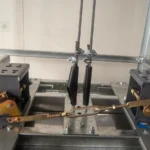
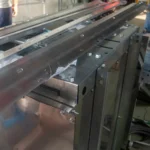
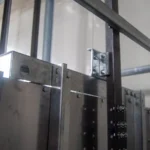
The frame is the skeleton that carries every load for the life of the lift. Here is where welding quality separates a durable unit from a rattly one.
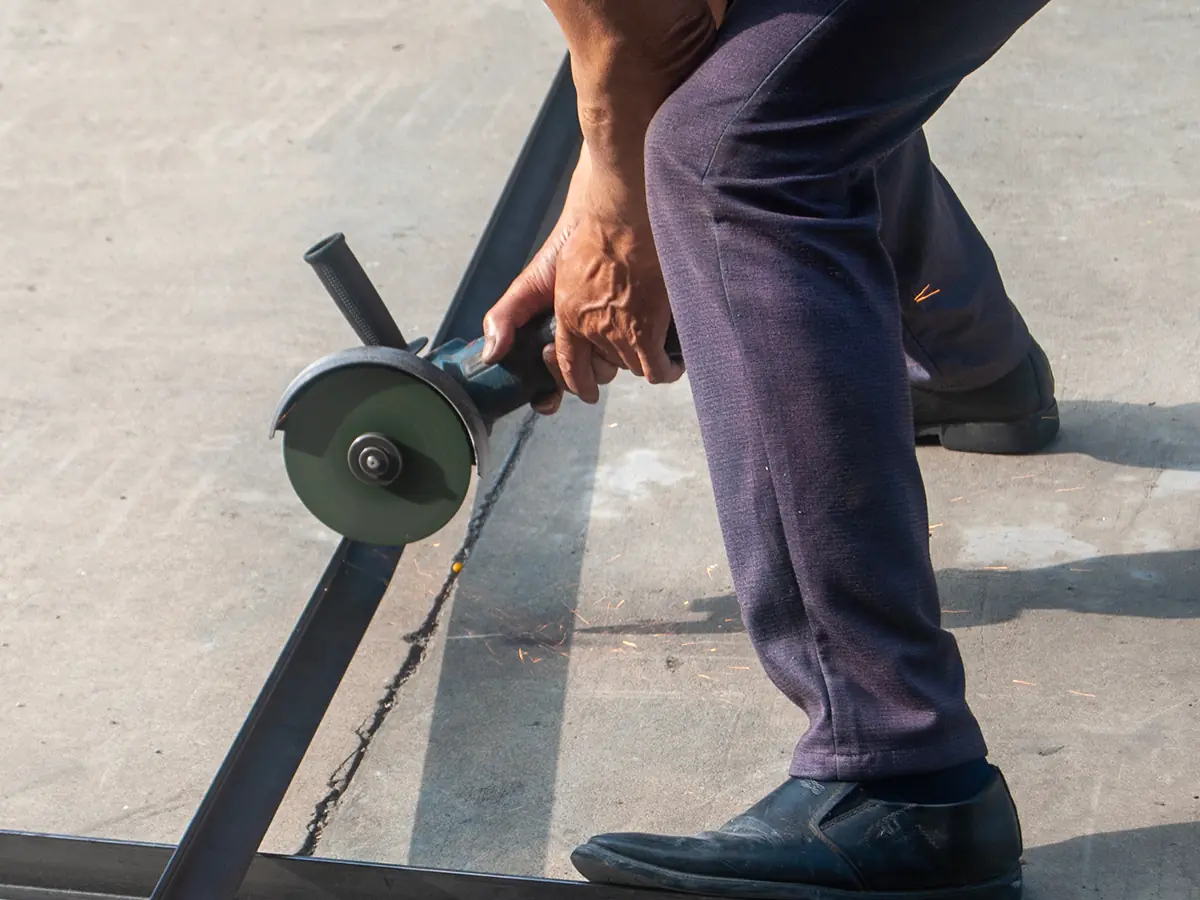
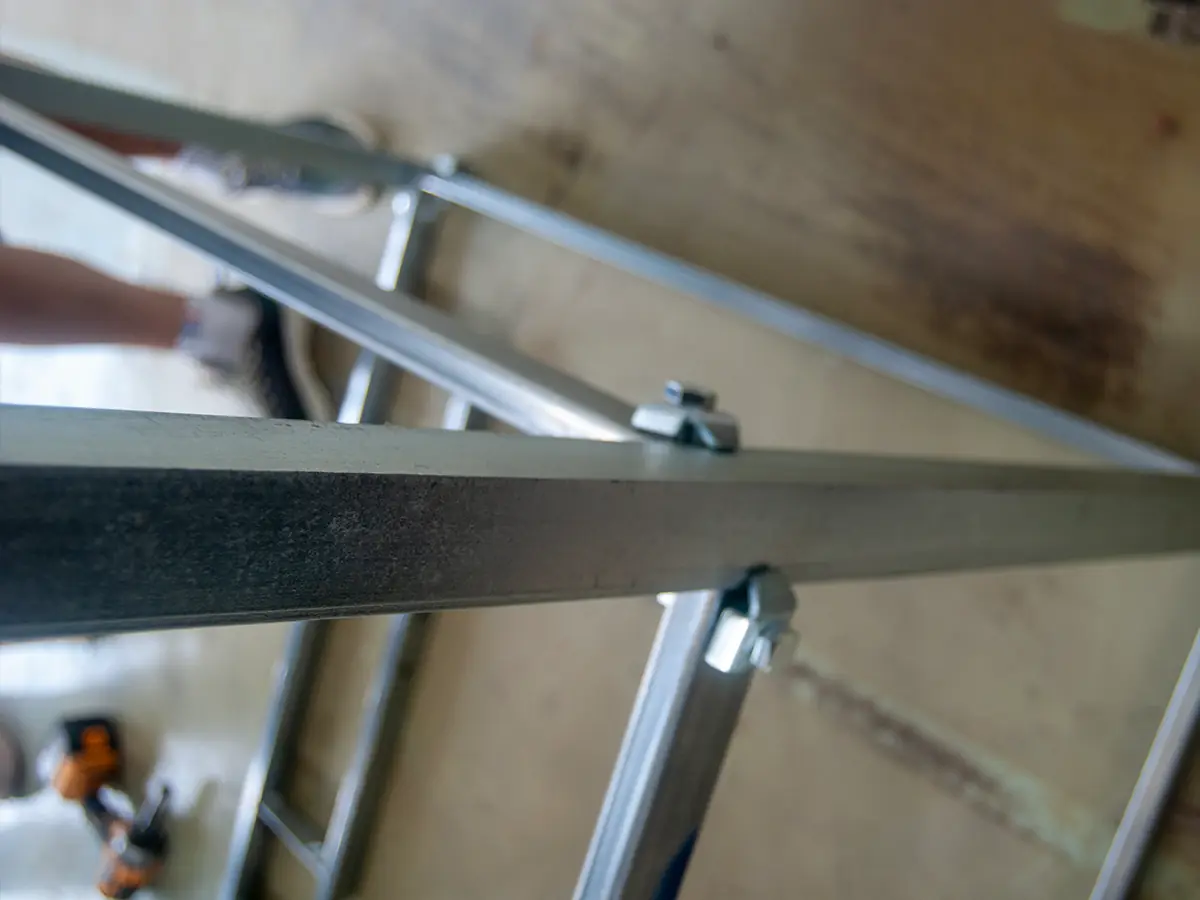
The weld itself is the real test. Look for continuous, uniform seams on load-bearing joints — not spot tacking. A properly welded frame keeps the cab level and quiet after hundreds of thousands of cycles. This is the single most important thing a dumbwaiter safety system depends on.
Next comes the drive — the part that actually moves the car. The two mainstream approaches are traction (rope + counterweight) and hydraulic (piston). Each is assembled differently:
For a deeper look at which drive fits which job, see our commercial dumbwaiter types guide.
The “brains” are wired in next: the controller (often a PLC), call buttons at each landing, the door interlock logic, and the emergency systems. The critical safety interlock must physically prevent the car from moving unless every landing door is closed and locked — a non-negotiable in any code-compliant build. Quality manufacturers also add overload sensing and a manual lowering mechanism so the car can be safely returned to a floor during a power loss.
Before a unit ships, it has to prove it can do the job. This is the moment of truth for any rated capacity claim.
| Test | What it verifies |
|---|---|
| Rated load run | Carries 100% of rated capacity across all stops, repeatedly, without fault |
| Overload trip | Exceeding rated load triggers the overload protection and halts operation |
| Leveling accuracy | Car stops flush with each landing within a few millimeters |
| Door interlock | Car will not move with any landing door open |
| Emergency lower | Manual lowering returns the car safely without power |
A manufacturer that can show you a load-test report — not just a sticker — is one worth buying from. It’s also the best protection against the jams and downtime covered in our maintenance guide.
After assembly and test, the unit is finished: cab surfaces cleaned or polished, seals fitted, and control panels labeled. A final QA pass checks door action, alarm, and labeling against the order. Then it’s crated for shipping — factory-direct suppliers like BsiteElevator typically ship the car, frame, and controls as a kit with installation drawings, which keeps cost down versus fully site-built lifts.
Before you shortlist a supplier, ask for:
A transparent dumbwaiter manufacturer answers these without hesitation. One that can’t is a red flag.
The cheapest unit upfront is rarely the cheapest over five years. A well-built lift with sound welds, a balanced drive, and a verified load rating needs only routine service. A poorly built one burns money on call-outs, door repairs, and lost service during breakdowns. Our 2026 cost guide breaks down what you should actually budget for.
Yes. Most commercial builds follow EN 81-3 (Europe) or ASME A17.1 plus local amendments (North America). Always confirm which applies in your market.
Reputable manufacturers share workshop photos, weld details, and load-test videos. Factory-direct suppliers often welcome a video call walkthrough of the line.
Not as much — painted or galvanized steel is fine for dry linen and laundry. Reserve stainless for kitchens, food, and medical use where wash-down and corrosion resistance are required.
Standard models typically ship in 2–4 weeks; custom configurations (specific size, drive, or finishes) run 4–8 weeks including fabrication and test.
A commercial dumbwaiter is only as good as the workshop that built it. Engineering to a real standard, clean welding, a balanced drive, and a verified load test are what turn a spec sheet into a lift that runs safely for 15–20 years. When you evaluate a dumbwaiter manufacturer, ask for the proof — design standard, material certs, and a load-test report — and let build quality, not just price, guide the decision.
Explore our full range of commercial dumbwaiter models or contact BsiteElevator for a factory-built configuration matched to your operation.


[…] This guide explains how a dumbwaiter control panel and electrical cabinet work together, what is inside them, how a single button press moves the car, the safety circuits that protect users, and how to choose the right control system for your building. If you are comparing models, it pairs well with our commercial dumbwaiter buying guide and our look at how a quality dumbwaiter is built. […]
[…] at the landing, the door easy to close, and the buttons consistent. This is why the quality of the manufacturing process shows up in daily operation, not just in the brochure — and why buyers sourcing directly from a […]
[…] at the landing, the door easy to close, and the buttons consistent. This is why the quality of the manufacturing process shows up in daily operation, not just in the brochure — and why buyers sourcing directly from a […]
[…] finish and hygiene details are exactly what separates a quality-built dumbwaiter from a budget unit, and they are worth confirming in the spec before you […]
[…] that keep a lift safe — and what test reports a buyer should always request. It pairs with our manufacturing guide and our safety features […]
[…] car frames and documented assembly, then passes load and safety testing before it ships. Our how-a-quality-dumbwaiter-is-built walkthrough shows the workshop-to-load-test […]
[…] How is it built and tested? See our workshop-to-load-test walkthrough. […]
[…] car frames and documented assembly, then passes load and safety testing before it ships. Our how-a-quality-dumbwaiter-is-built walkthrough shows the workshop-to-load-test […]
[…] runs a factory test before shipping, which protects you from a unit that fails on site. Our build and test guide shows what that process looks […]