Address
No.3185 Xizha Rd,Dachuangang, Zhenze,Wujiang,Suzhou,China
Work Hours
24/7 Global Support
Address
No.3185 Xizha Rd,Dachuangang, Zhenze,Wujiang,Suzhou,China
Work Hours
24/7 Global Support
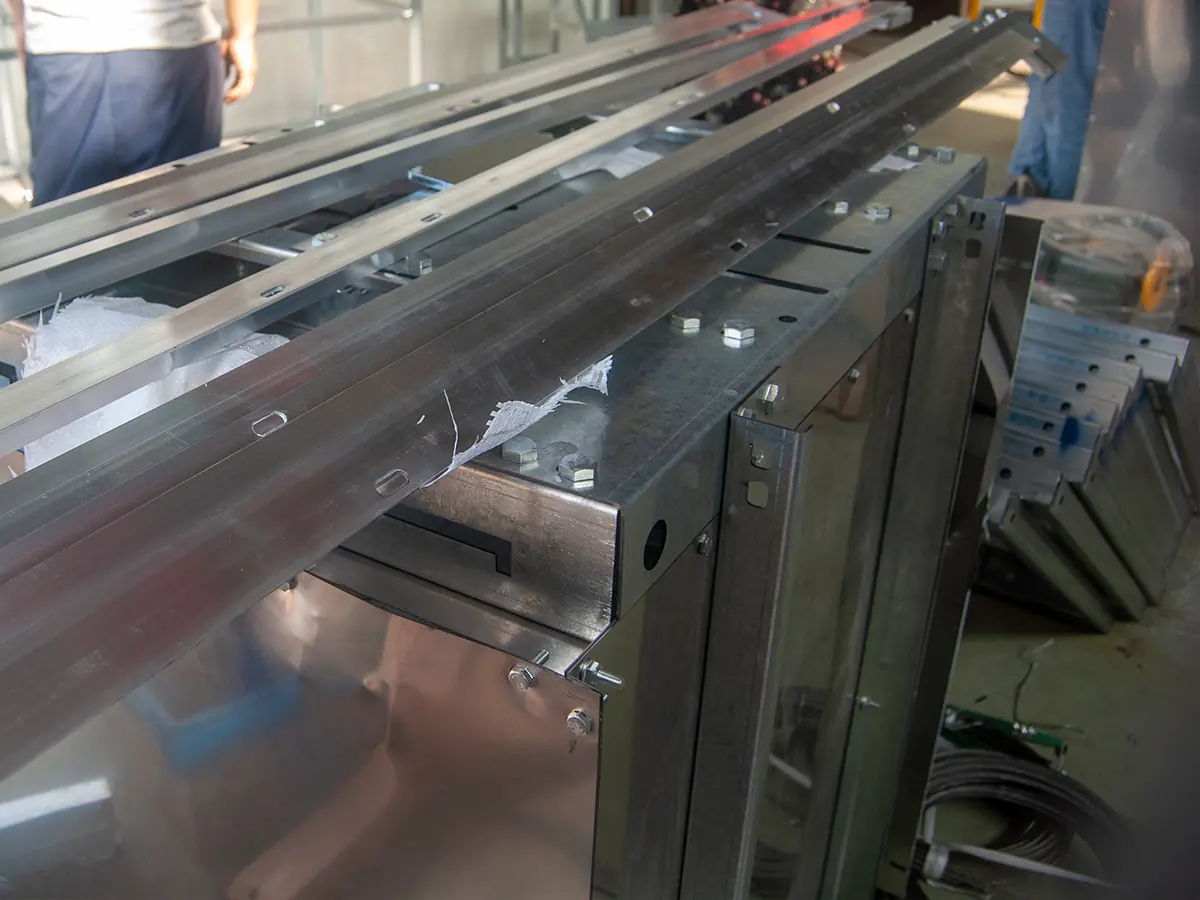
If you are shopping for a commercial dumbwaiter, one of the first decisions you will face is the type of unit that fits your building. The wrong configuration wastes space, pushes up cost, or fails to meet your daily volume. Understanding the main commercial dumbwaiter types helps you buy with confidence instead of guessing.
In this guide, we compare the three most common dumbwaiter configurations — window-type, floor-type, and chain-driven — explain how each works, and show you which applications they suit best. Whether you run a compact café or a multi-floor hotel, this breakdown will point you to the right food lift.
The window-type dumbwaiter is the classic food lift. The cab travels inside a shaft, and at each landing there is a small “window” door — typically waist-high — through which staff load and unload trays. It uses a traction (rope-and-counterweight) drive, the same reliable principle found in passenger elevators.
Best for: Restaurants, cafés, and bars where staff pass dishes and plates over a counter-height opening. It is the most space-efficient option because the cab footprint is small and the shaft is narrow.
Typical specs: 50 kg to 250 kg capacity, 2 to 4 stops, stainless-steel or glass-front cab. Most BsiteElevator window-type units are CE-certified and arrive pre-wired for fast installation.
Pros: Compact, quiet, energy-efficient thanks to the counterweight, and easy to integrate into an existing wall.
Cons: Lower max capacity than floor-type units, and loading is manual over the sill rather than roll-in.
A floor-type dumbwaiter (sometimes called a cart dumbwaiter) has a full-height door and a cab floor flush with the landing floor, so you can roll a service cart or stack of crates straight in. Instead of lifting trays by hand, staff wheel loads in and out.
Best for: Hotels, hospitals, banquet halls, and industrial kitchens where loads are heavy or bulky — linen carts, dish racks, cleaning supplies, or stock. If your team moves carts between floors, this is the configuration to choose.
Typical specs: 100 kg to 500 kg capacity, 2 to 6 stops, reinforced cab floor rated for cart wheels.
Pros: Handles the heaviest loads, reduces manual lifting injuries, and speeds up high-volume transport.
Cons: Requires more floor space at each landing and a wider shaft than window-type units.
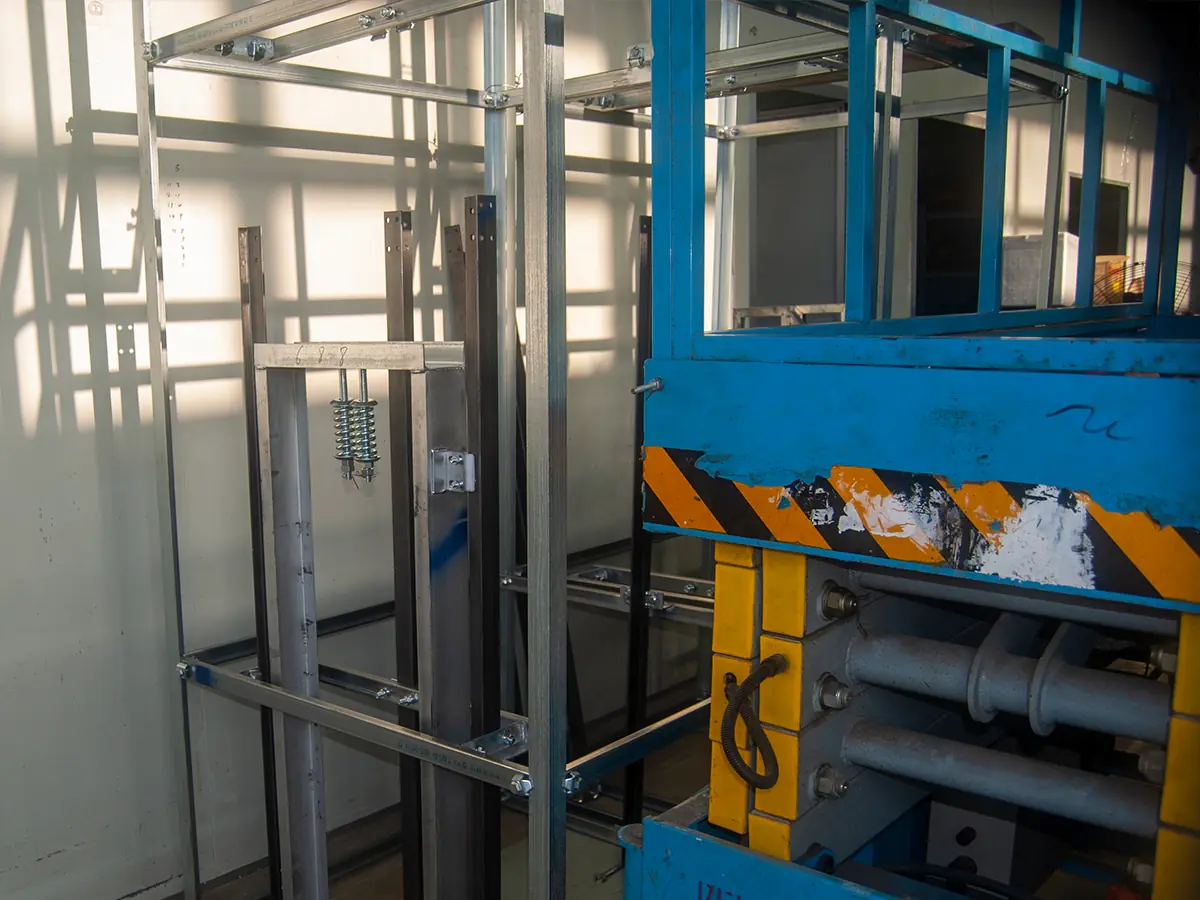
A chain-driven dumbwaiter replaces the rope-and-counterweight system with a motor-driven chain that raises and lowers the cab. This simple, robust mechanism is favored for rugged environments and heavier, frequent cycles.
Best for: Warehouses, factories, and back-of-house applications where the lift runs constantly and durability matters more than silent operation. It is also a common choice where building height exceeds what a basic traction unit handles comfortably.
Typical specs: 100 kg to 300 kg capacity, 2 to 5 stops, direct chain drive with overload protection.
Pros: Extremely durable, fewer delicate components, and well-suited to harsh or high-cycle conditions.
Cons: Slightly higher energy use than counterweighted traction, and a bit noisier in operation.
Use this quick reference to narrow your options:
| Type | Typical Capacity | Loading Style | Best Application | Space Needed |
|---|---|---|---|---|
| Window-Type (Traction) | 50–250 kg | Over-the-sill, by hand | Restaurants, cafés, bars | Smallest |
| Floor-Type | 100–500 kg | Roll-in cart | Hotels, hospitals, banquet | Largest |
| Chain-Driven | 100–300 kg | Over-the-sill or roll-in | Industrial, high-cycle | Medium |
Ask yourself these four questions before deciding:
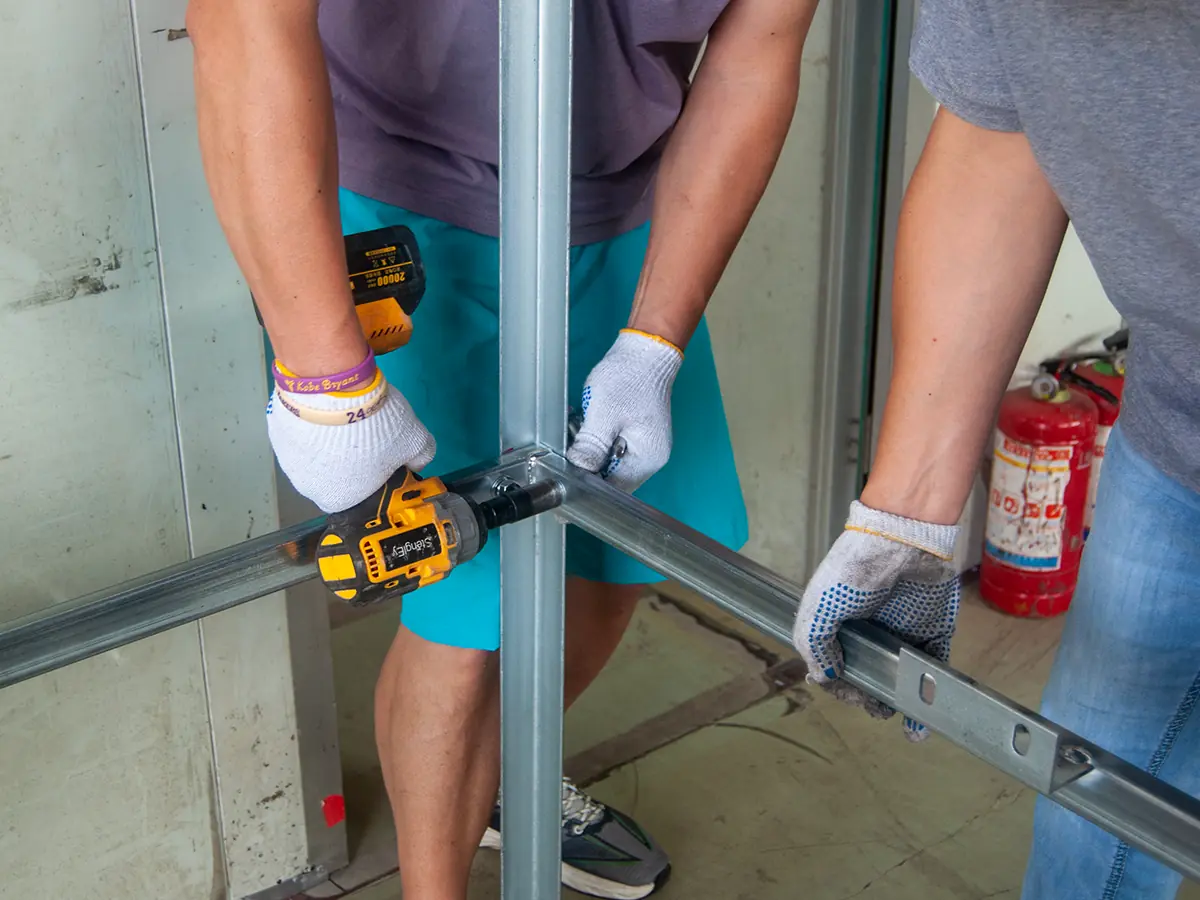
At BsiteElevator, we manufacture all three commercial dumbwaiter types to international safety standards (CE, ASME-aligned, EN 81-3). Every unit ships with door interlocks, emergency stop, overload protection, and clear capacity labeling as standard — not as paid add-ons.
Our engineers help you select the right dumbwaiter configuration for your layout, capacity, and local code, then support you through installation and inspection. With capacities from 50 kg to 500 kg and custom shaft dimensions available, we match the lift to your building instead of forcing your building to fit the lift.
The right commercial dumbwaiter type depends on what you move, how much space you have, and your budget. Window-type wins for compact food service, floor-type wins for carts and heavy loads, and chain-driven wins for rugged, high-cycle duty.
Still unsure which configuration fits your operation? Contact BsiteElevator today for a free consultation and a quote tailored to your building and capacity needs.


[…] deciding between formats, start with our dumbwaiter vs service elevator comparison, then read our commercial dumbwaiter types guide for a side-by-side of window-type and floor-type […]
[…] Not every service lift is built the same. The right configuration depends on what you’re moving and how often. For a full breakdown of available models, see our commercial dumbwaiter types guide. […]
[…] between levels automatically. In many markets a food lift is simply the catering-world name for a commercial dumbwaiter — the same machine, tuned for food […]
[…] when the lift serves three or more floors or needs to carry carts. See the full lineup in our dumbwaiter types […]
[…] when the lift serves three or more floors or needs to carry carts. See the full lineup in our dumbwaiter types […]
[…] quotes means every supplier prices the same, buildable job — and it tells you instantly whether a window-type or floor-type unit fits your building at […]
[…] compares with hydraulic and screw drives, and what to look for when choosing one. It builds on our dumbwaiter types article and our control system […]
[…] compares with hydraulic and screw drives, and what to look for when choosing one. It builds on our dumbwaiter types article and our control system […]
[…] dumbwaiter types overview and complete buying guide expand each of these points and help you brief a supplier with […]
[…] buying guide turns this checklist into a specification sheet you can send to suppliers, and the types of dumbwaiter article shows the model families […]
[…] dumbwaiter buying guide turns this list into a specification you can send to suppliers, and the dumbwaiter types article shows the model families […]
[…] floors, with a larger car, rated capacity in persons, and stricter life-safety systems. See our dumbwaiter types guide and our applications overview for […]
[…] Choose the Right ModelCommercial Dumbwaiter Safety Features: What Every Restaurant Owner Should KnowCommercial Dumbwaiter Types: Window-Type, Floor-Type & Chain-Driven ComparedHow a Quality Commercial Dumbwaiter Is Built: From Workshop to Load […]
[…] rarely shows up on a building’s energy bill next to lighting or air conditioning. Our dumbwaiter types article shows how size scales the […]
[…] Every Restaurant Owner Should KnowCommercial Dumbwaiter Buying Guide: How to Choose the Right ModelCommercial Dumbwaiter Types: Window-Type, Floor-Type & Chain-Driven ComparedHow a Quality Commercial Dumbwaiter Is Built: From Workshop to Load […]