Address
No.3185 Xizha Rd,Dachuangang, Zhenze,Wujiang,Suzhou,China
Work Hours
24/7 Global Support
Address
No.3185 Xizha Rd,Dachuangang, Zhenze,Wujiang,Suzhou,China
Work Hours
24/7 Global Support
Practical bakery dumbwaiter guide for bakeries and pastry kitchens: capacity, speed, hygiene, doors, installation and cost. Move trays, racks and baked goods safely between floors.
A bakery moves more weight than most people expect. Dough trays, sheet pans, cooling racks, ingredient sacks and finished loaves all travel between the mixer, the proofer, the ovens and the front counter. When those levels are split across two or three floors, your team ends up carrying hot, heavy loads by hand all day. A bakery dumbwaiter solves that problem with a small, enclosed food lift built for exactly this kind of work.
A bakery dumbwaiter is a compact service lift that moves trays, racks and baked goods between floors inside a bakery, pastry kitchen or in-store bakery. Unlike a passenger elevator, it carries products and small equipment, not people. The car is sized for standard sheet pans and gastro trays, with bi-parting or single-slide doors on each landing and a simple call-button control. Most units are electric, driven by a traction belt or screw, and run quietly enough to sit just behind a retail counter.
For a bakery, the value is not luxury, it is throughput. A single dumbwaiter can move what two staff members carry by hand, and it does it without breaking the cold chain, without dropping a tray of croissants, and without a trip to the emergency room.
Watch a bakery at 6 a.m. and the pattern is obvious. Dough is mixed downstairs, proofed, then carried up to the oven deck. Finished product cools, gets wrapped, and is carried again to the sales floor. Every trip is a load of 10 to 25 kilograms held at chest height on a narrow staircase. Multiply that by dozens of trips and you get fatigue, bottlenecks and accidents.
A bakery dumbwaiter collapses that loop into a button press. Product goes in on one floor, arrives on the next in 10 to 20 seconds, and your bakers stay at their stations. The staircase stays clear for people, not freight.
Here is why bakeries of every size, from a single shop to a multi-floor production kitchen, add a food lift.
Carrying sheet pans up stairs is a leading cause of back and shoulder strain in bakeries. A bakery dumbwaiter removes the manual lift, lowering workers-comp risk and lost-time injuries.
Peak demand is unforgiving. A dumbwaiter keeps product flowing to the counter while your team focuses on baking, not hauling.
Chilled fillings and creams move in a closed car instead of sitting on a warm staircase, helping you stay on the right side of food safety.
A level car with guided trays means fewer dropped pans and fewer ruined pastries than a human carried up a step.
A shaft takes a fraction of the footprint of a freight elevator and can tuck into a wall between production and sales.
Stainless interiors wipe down fast and keep pests and dust away from open product during transport.
Proofing downstairs, baking mid-level and packing upstairs becomes one continuous flow rather than a relay race.
One lift does the vertical work of repeated manual trips, so you need fewer staff minutes per tray moved.
A clean, quiet bakery dumbwaiter behind the counter signals a serious, organized operation to wholesale and walk-in customers alike.
Most bakery units carry 50 to 250 kg, with the sweet spot for a small shop around 100 kg. That is enough for a full sheet pan rack or several stacked trays. Car dimensions usually match gastronorm or standard bakery pan footprints so trays slide straight in.
| Load rating | Typical car size | Best fit |
|---|---|---|
| 50 to 100 kg | 600 x 600 x 800 mm | Cafes, in-store bakeries, one or two pan racks |
| 100 to 150 kg | 800 x 800 x 1000 mm | Stand-alone bakeries, mixed trays and sacks |
| 150 to 250 kg | 900 x 900 x 1200 mm | Production kitchens, full sheet pan racks |
For a full sizing method, ServLifts breaks down load capacity and pan math in their guide on dumbwaiter load capacity for food service, which applies directly to bakery pans.
Speed matters most when orders stack up. A bakery dumbwaiter typically moves at 0.2 to 0.5 m/s, so a two-floor trip is roughly 10 to 20 seconds plus load time. With call buttons on each landing, staff send and receive without leaving their station.
| Floors served | Typical cycle | Trips per hour |
|---|---|---|
| 2 floors | 20 to 30 seconds | 90 to 120 |
| 3 floors | 30 to 45 seconds | 60 to 90 |
| 4 plus floors | 45 to 60 seconds | 45 to 70 |
Cycle time includes door open, load, travel, unload and return. Pre-staging trays beside the car keeps the loop tight during the morning rush.
Bakeries live and die by cleanliness. A bakery dumbwaiter should have a stainless steel car and landing sills, rounded corners for easy wiping, and a floor drain or removable tray to catch crumbs. Many food-code references, such as the FDA Food Code, expect food contact surfaces to be smooth, durable and cleanable, which is exactly how a lift car should be built. Interlocks keep doors from opening unless the car is present, so product never tips into the shaft.
Choose bi-parting vertical doors for tight landings or single-slide doors for simpler shafts. Stainless steel is the default for the car; the frame can match your front-of-house finish if the lift sits in view. For a bakery dumbwaiter behind the counter, a brushed stainless landing with a glass observation panel looks clean and reassures customers that product is handled with care.
The best location is on the shortest line between where product is made and where it is sold or packed. Common layouts put the car between the basement mixer and the ground-floor oven, or between the production kitchen and the upstairs cafe seating. Keep landings clear on both ends so trays load and unload without a traffic jam.
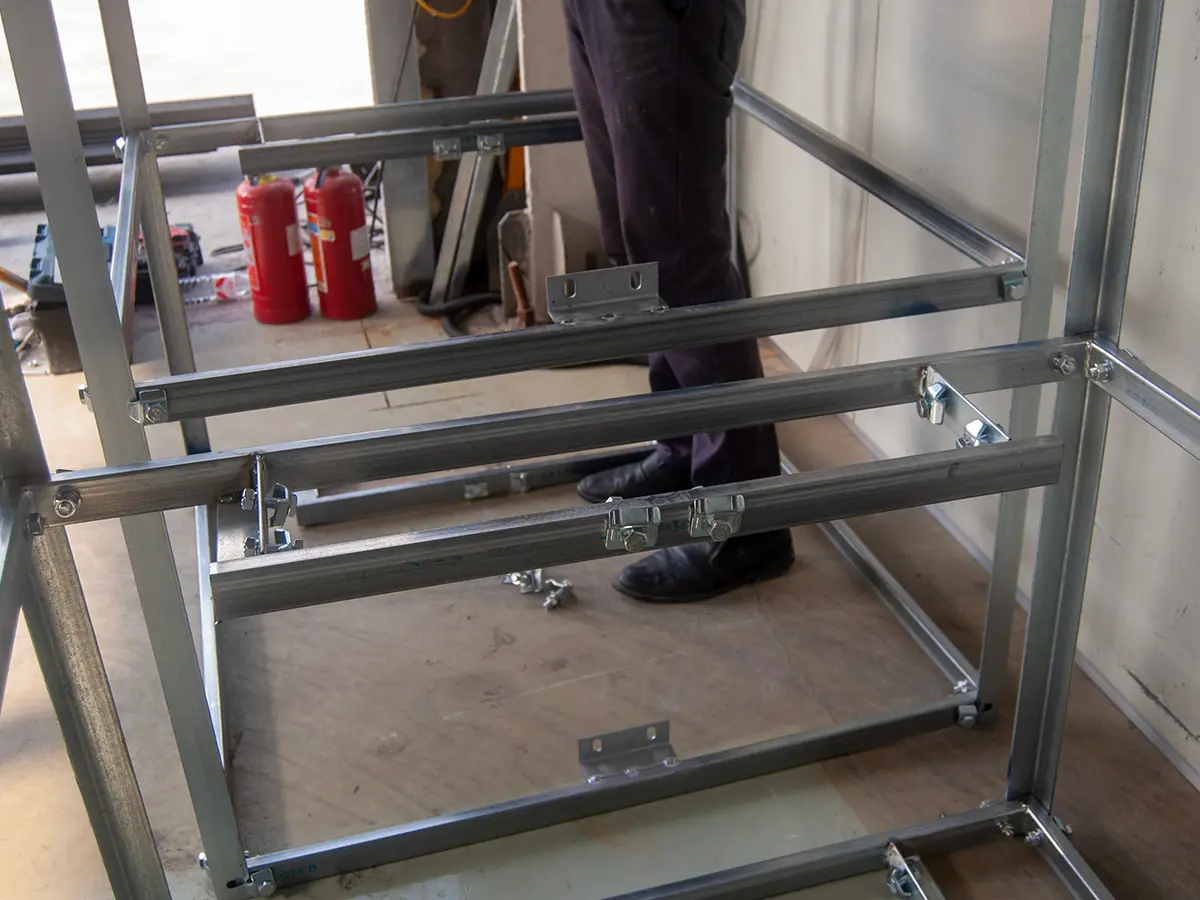
You need a vertical chase roughly 1.0 to 1.2 square meters for a standard car, plus pit depth and headroom per the model. Load-bearing walls or a freestanding steel frame both work. Because every site differs, plan the shaft early and review the exact dimensions before you order. Our dumbwaiter shaft size guide walks through the space you need and the mistakes to avoid.
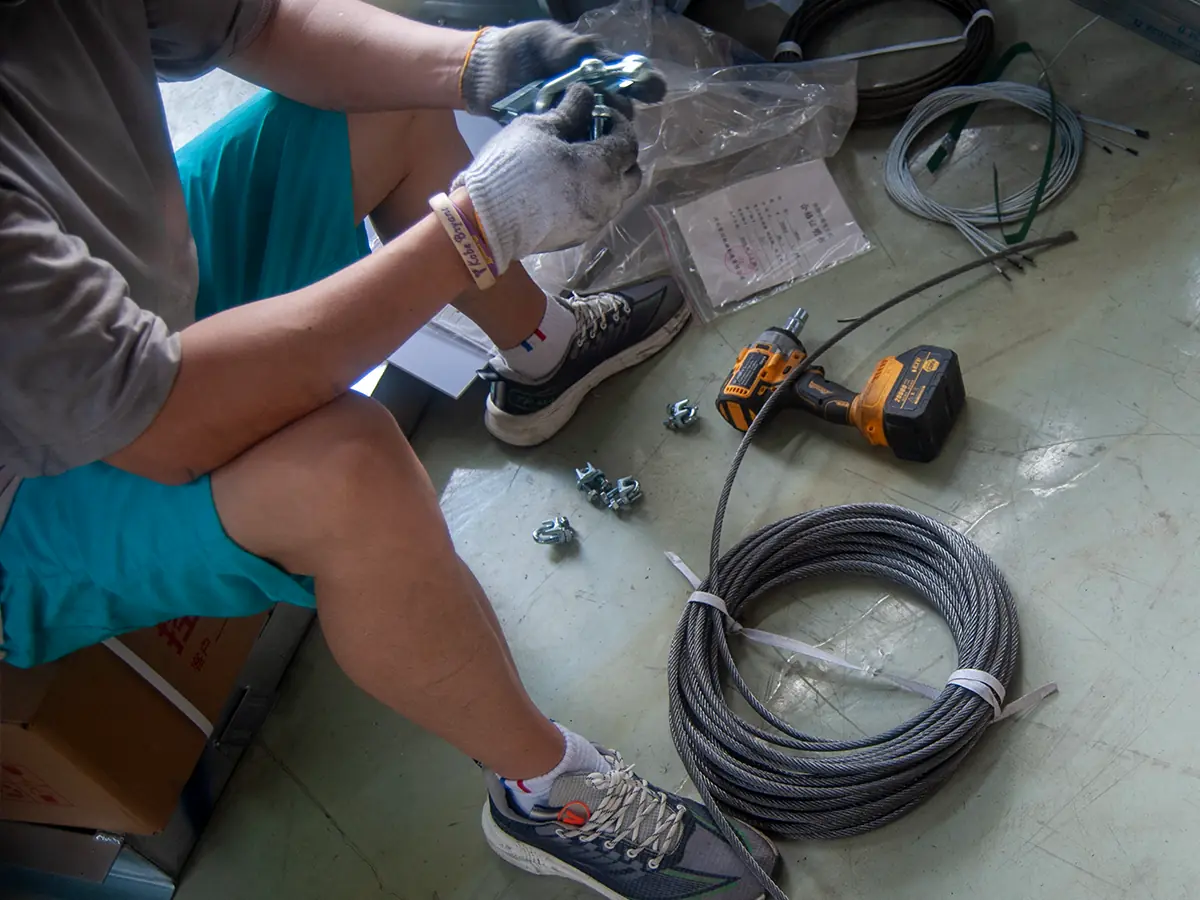
A quality bakery dumbwaiter is built on a proper production line, then inspected and tested before it ships. Ask the supplier for the test record, including load test and door interlock checks, so you know the unit is safe on day one.
Small electric units often start in the low thousands of dollars, with larger multi-floor cars reaching well into five figures once shaft work and landing finishes are included. Payback is usually fast because you save labor minutes on every tray moved.
| Item | Typical cost range | Notes |
|---|---|---|
| Basic 2-floor unit | USD 3,000 to 6,000 | 50 to 100 kg, standard car |
| Mid 3-floor unit | USD 6,000 to 12,000 | 100 to 150 kg, stainless car |
| Shaft and finish | USD 2,000 to 8,000 | Varies with site |
| Payback period | 6 to 18 months | Depends on trip volume |
See our cafe dumbwaiter guide and bar dumbwaiter guide for how other food businesses sized and justified the spend.
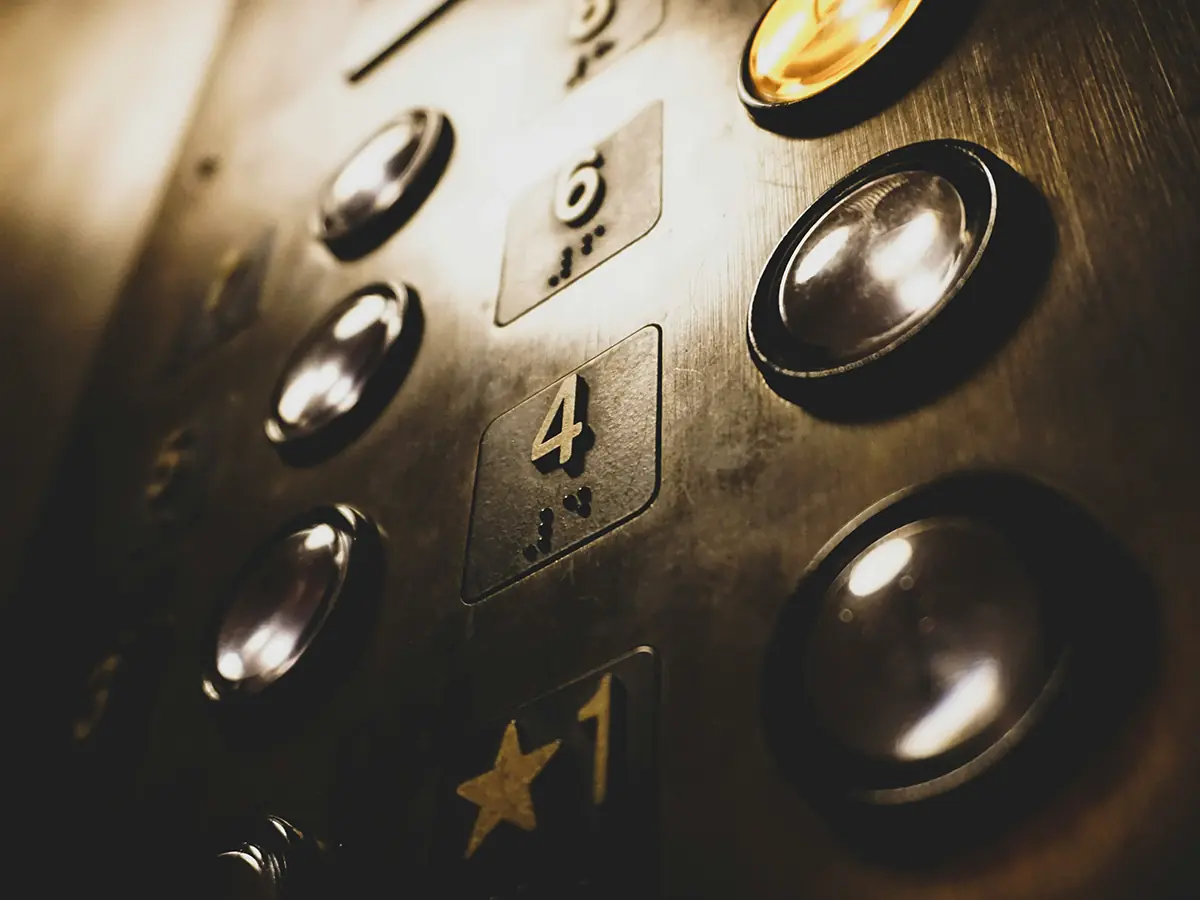
Start with your heaviest, most frequent load and size the car around it, not the average. Confirm the drive type: a traction or screw electric drive is quiet and low maintenance for a bakery. Check the control panel is simple enough for any shift worker to use without training, with clear call buttons and floor indicators. Finally, buy from a supplier that shows real factory testing and supports spare parts. Our electric dumbwaiter guide explains drive options, and our operation guide covers daily use and cleaning.
Standards also matter. In the United States, lifts fall under safety codes such as ASME A17.1, while global manufacturers reference established elevator safety practice from leaders like Otis. Ask your supplier which standard their unit is built to.
Most carry 50 to 250 kg. A small shop usually needs 100 kg, enough for one or two sheet pan racks. Size to your heaviest routine load, not the average.
Yes, with a stainless car and heat-tolerant trays. Keep the car clear of open flame, and let trays cool slightly if your model specifies a temperature limit.
It needs a vertical chase sized to the car, plus pit and headroom. A freestanding steel frame works where load-bearing walls are not available. Review our shaft size guide before ordering.
A two-floor trip is about 20 to 30 seconds including doors. That supports 90 to 120 trips per hour, more than enough for a busy morning.
When built with a stainless, easy-clean car and proper interlocks, yes. Choose smooth, wipeable surfaces that meet food-contact expectations.
A bakery dumbwaiter is one of the highest-return upgrades a multi-floor bakery can make. It protects your team, cuts breakage, keeps product moving during the rush and pays for itself in labor savings. Size it to your heaviest tray, buy from a supplier with real factory testing, and plan the shaft early. If you also run a cafe or bar, our home dumbwaiter guide and installation checklist cover the rest of the picture.