Address
No.3185 Xizha Rd,Dachuangang, Zhenze,Wujiang,Suzhou,China
Work Hours
24/7 Global Support
Address
No.3185 Xizha Rd,Dachuangang, Zhenze,Wujiang,Suzhou,China
Work Hours
24/7 Global Support
Comparing dumbwaiters and service elevators? Learn the key differences in weight capacity, cost, and installation — and find out which vertical lift solution fits your business.
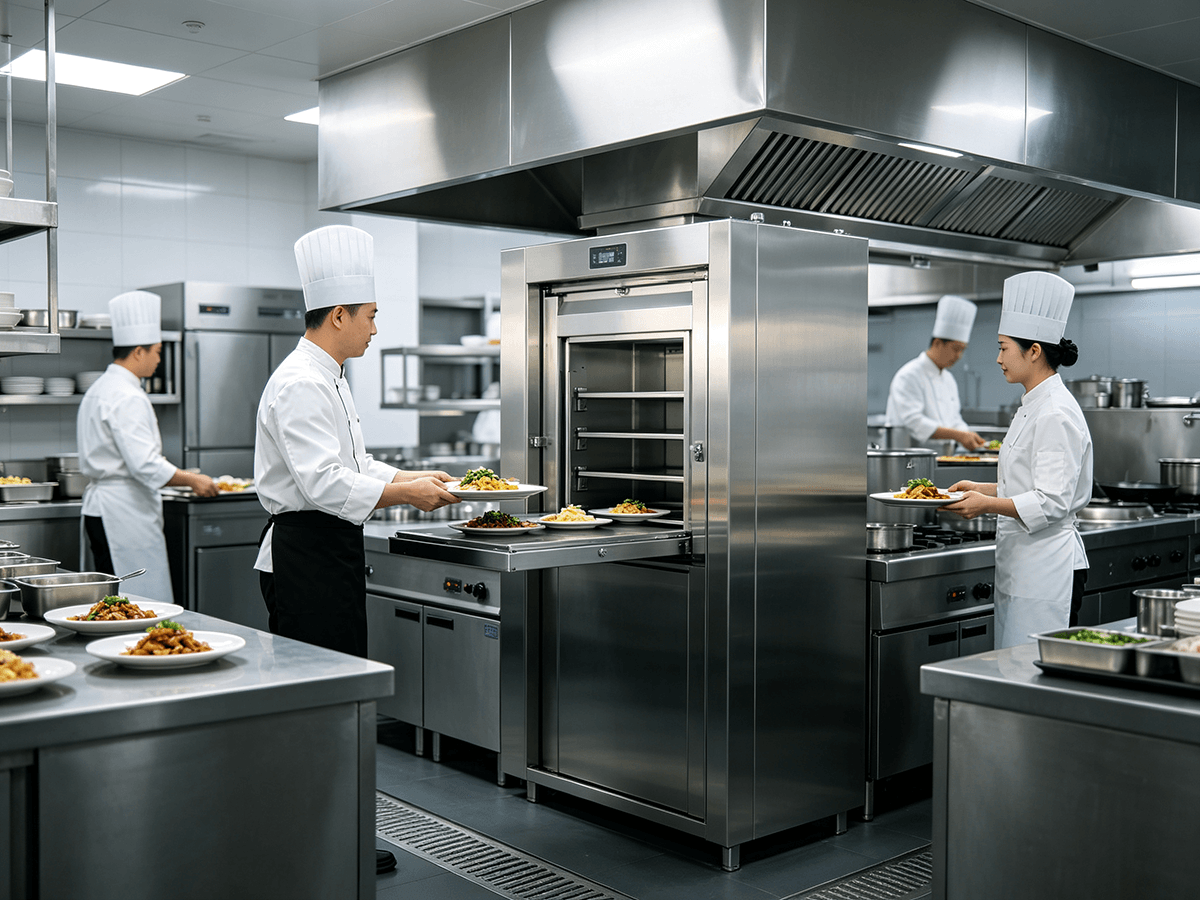
A dumbwaiter is a small freight elevator designed to transport goods — not people — between floors. Typically used in restaurants, hotels, hospitals, libraries, and private residences, dumbwaiters carry food, dishes, linens, books, and other lightweight cargo efficiently and safely.
Modern dumbwaiters come in various configurations, including window-style dumbwaiters and floor-loading models, with weight capacities ranging from 100 kg to 250 kg. They are compact, motorized, and require minimal shaft space compared to full-sized elevators.
Because dumbwaiters are not designed for human occupancy, they have simpler safety requirements than passenger elevators, which makes them a cost-effective vertical transport solution for businesses that need to move items between floors quickly.
A service elevator (also called a freight elevator or goods lift) is a larger, heavier-duty elevator designed to transport heavy equipment, furniture, inventory, and sometimes personnel along with goods. Service elevators are commonly found in commercial buildings, warehouses, hospitals, hotels, and retail establishments.
Unlike dumbwaiters, service elevators can accommodate human passengers (usually service staff) and have weight capacities ranging from 500 kg to several tons. They require a dedicated shaft, more robust machinery, and must comply with stricter building codes and safety regulations, including emergency communication systems and door-locking mechanisms.
Service elevators typically have larger car dimensions — often 1.5m × 1.5m or bigger — allowing them to transport bulky items like furniture, carts, and equipment that would never fit in a dumbwaiter.
While both are vertical transport solutions, dumbwaiters and service elevators serve very different purposes. Understanding the difference between a dumbwaiter and a service elevator is essential when planning a new construction or renovation project.
The most significant difference is load capacity. Dumbwaiters typically handle 50–250 kg, while service elevators can carry 500–5,000 kg or more. If you are moving heavy equipment or large quantities of goods, a service elevator is the right choice.
Dumbwaiter cars are compact — usually 60×60 cm to 100×120 cm — just large enough for food trays, boxes, or small carts. Service elevator cars are much larger, often exceeding 150×150 cm, and can accommodate pallets, hospital beds, or furniture.
Dumbwaiters are strictly for goods only and never carry people. Service elevators, while primarily designed for freight, may allow service personnel to ride along with the load in many jurisdictions.
A commercial dumbwaiter costs significantly less than a service elevator — typically $3,000–$15,000 installed, depending on the number of stops and configuration. Service elevators can range from $30,000 to over $100,000 due to their size, complexity, and regulatory requirements.
Dumbwaiters require less space, lighter structural support, and simpler electrical connections. Service elevators need a dedicated shaft, reinforced pit, machine room, and compliance with comprehensive safety codes such as ASME A17.1/CSA B44.
Dumbwaiters typically travel at 0.5–1.0 m/s, which is sufficient for transporting goods between a few floors. Service elevators can travel faster, but their speed is often limited when carrying freight.
| Feature | Dumbwaiter | Service Elevator |
|---|---|---|
| Weight Capacity | 50–250 kg | 500–5,000+ kg |
| Car Size | 60×60 – 100×120 cm | 150×150 cm and larger |
| Passengers | No | Yes (service personnel) |
| Typical Cost (Installed) | $3,000 – $15,000 | $30,000 – $100,000+ |
| Shaft Required | Minimal | Full dedicated shaft |
| Building Code | Simpler requirements | ASME A17.1 / strict codes |
| Speed | 0.5–1.0 m/s | 0.5–2.5 m/s |
| Best For | Food, dishes, small goods | Furniture, equipment, inventory |
A dumbwaiter is the ideal solution when your business primarily needs to move smaller items between floors. Here are the most common scenarios where a dumbwaiter makes the most sense:
For most food service and hospitality businesses, a dumbwaiter vs service elevator comparison clearly favors the dumbwaiter due to its lower cost, compact footprint, and adequate capacity for daily operations.
Choose a service elevator when your business handles heavier loads, larger items, or requires the flexibility of moving both goods and personnel. Common scenarios include:
At BsiteElevator, we specialize in manufacturing high-quality commercial dumbwaiters and food lifts designed for the global market. Our product range includes:
All BsiteElevator dumbwaiters are built with quality materials, CE-certified components, and are backed by our professional technical support team. Whether you are opening a new restaurant or upgrading your hotel facilities, we have the right dumbwaiter lift solution for you.
No. Dumbwaiters are designed exclusively for transporting goods. They are not built to carry people and doing so would be unsafe and likely violate local building codes.
A commercial dumbwaiter typically costs between $3,000 and $15,000, depending on the weight capacity, number of stops, configuration (window-type or floor-type), and additional features like control systems.
Yes, in most jurisdictions. While dumbwaiters have simpler requirements than passenger elevators, you will likely need a building permit and your installation must comply with applicable codes such as ASME A17.1. Always consult a licensed professional before installation.
A typical dumbwaiter installation takes 1–3 days for a standard 2–3 stop configuration, depending on the building preparation and site conditions.
BsiteElevator offers dumbwaiters with weight capacities from 100 kg up to 250 kg. For loads exceeding 250 kg, a service elevator or heavy-duty goods lift may be more appropriate.
Understanding the difference between a dumbwaiter and a service elevator is the first step in choosing the right vertical transport solution for your business. For most food service, hospitality, and light commercial applications, a dumbwaiter offers the perfect balance of capacity, cost, and convenience. For heavier industrial or bulk transport needs, a service elevator is the better investment.
At BsiteElevator, we help businesses around the world find the ideal dumbwaiter solution. Contact our team today for expert advice and a customized quote for your project.