Address
No.3185 Xizha Rd,Dachuangang, Zhenze,Wujiang,Suzhou,China
Work Hours
24/7 Global Support
Address
No.3185 Xizha Rd,Dachuangang, Zhenze,Wujiang,Suzhou,China
Work Hours
24/7 Global Support
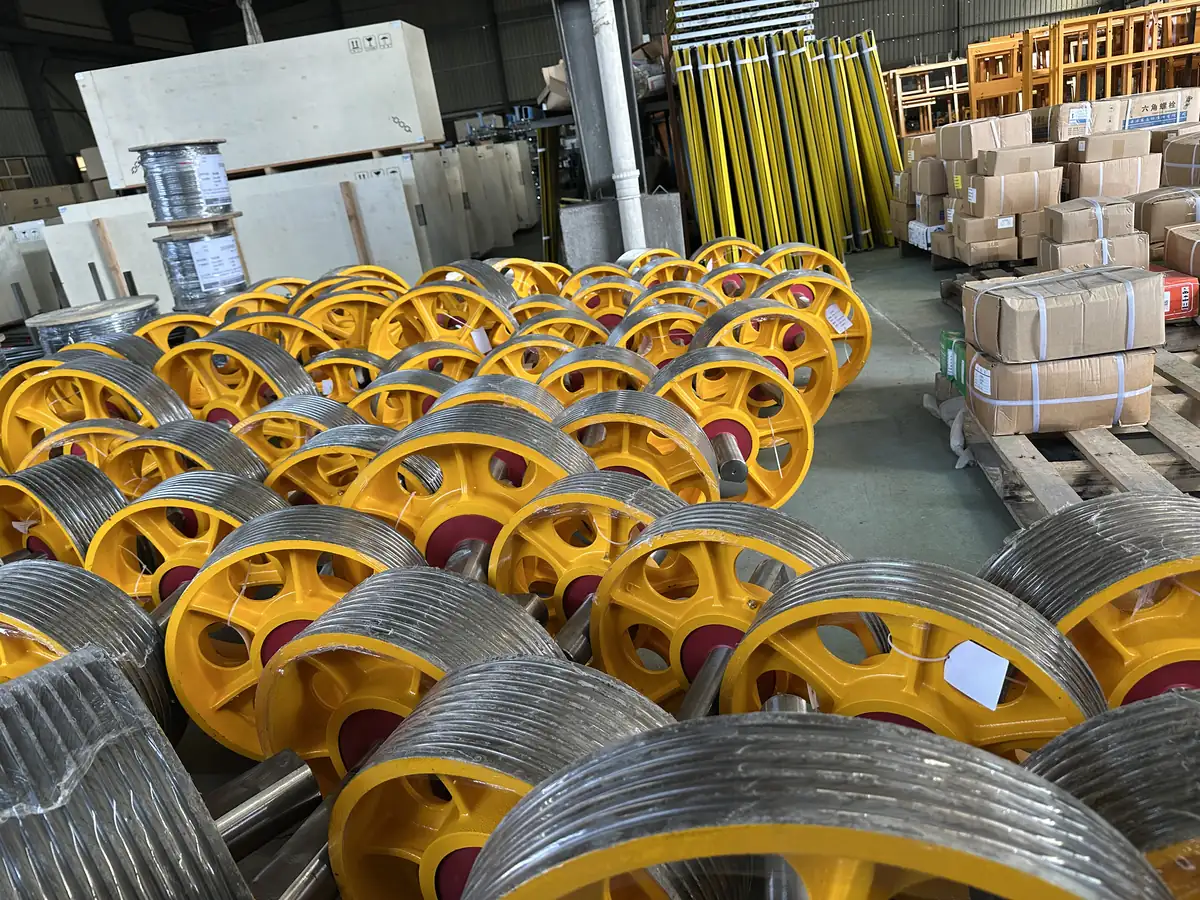
Dumbwaiter door interlock devices are the single most important safety component on a service lift. They make sure the car cannot move unless every landing door is closed and locked, and that a door cannot open unless the car is parked at that floor. In this article we explain how they work and why bypassing one is never worth the risk.
A dumbwaiter door interlock is an electromechanical lock tied to the controller. The car drive is enabled only when a door-closed signal is present at every landing, and the door can be unlocked only when the car is within the landing zone. The two conditions are mutually exclusive by design.
Most commercial units use an electromechanical bolt that physically blocks the door, backed by a sensor. Magnetic or purely electronic locks exist but are held to the same fail-safe principle: loss of power must keep the door locked, not open.
A jammed interlock tempts operators to tape the switch or defeat the lock to keep service running. That removes the only thing stopping a car from moving with a door open, exposing staff to a shear or fall hazard. It also voids the inspection certificate.
Interlocks are checked at every periodic inspection by triggering each door and confirming the car stays put. A unit that moves with any door open fails immediately and must be taken out of service.
Keep the lock clean, lubricated, and free of paint or debris, and never adjust the travel switch without re-testing. A misaligned striker plate is the usual cause of intermittent faults.
Because the interlock is safety-critical, write the requirement into the purchase specification rather than assuming it is included. Confirm that every landing gets a certified, fail-safe lock and that the controller enforces the door-closed condition before any movement is allowed.
At handover, ask the installer to demonstrate each interlock and to record the test, so you have proof the device works as specified. That record is also what an inspector will want to see at the first periodic check.
No. A faulty interlock takes the lift out of service until repaired; running it is unsafe and illegal.
At every scheduled inspection and after any door or controller work.
Yes, every landing that opens into a occupied space needs a compliant interlocked door.
A dumbwaiter door interlock is a fail-safe device, not an inconvenience. Keep it intact, test it on schedule, and treat any fault as a stop-work condition. See our dumbwaiter safety features guide for the full safety checklist.
For related guidance, review our safety features guide, and compare drive options on the ServLifts resource. Standards such as ASME A17.1 and the EU Lift Directive 2014/33/EU define the safety baseline we build to.